Monday, August 24, 2020

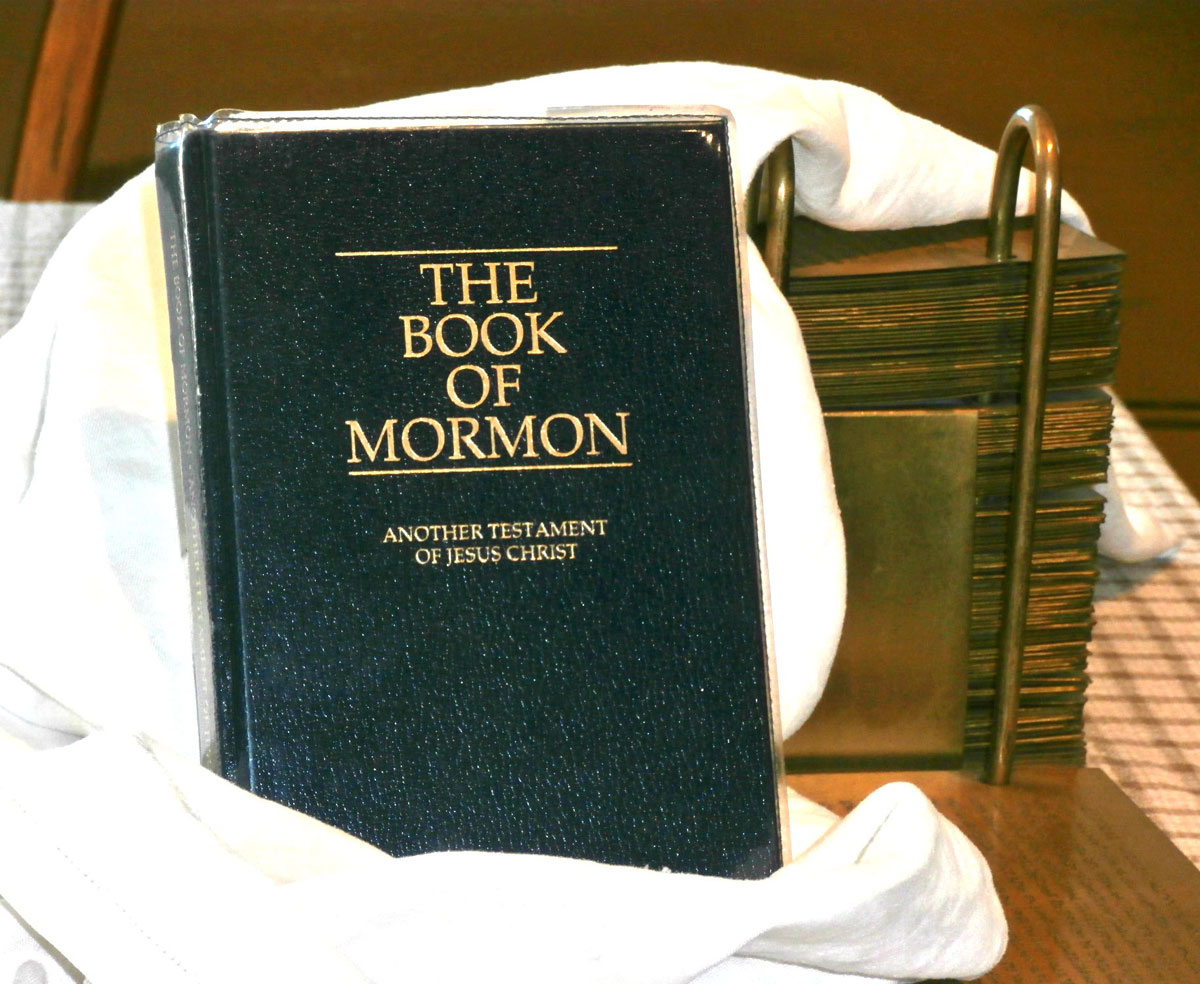
Member Missionaries, Ministers or Culture Warriors?


Nephi, the son of Helaman, was praying on a tower in his garden one day when a crowd gathered. When he was finished with his prayer, he stood and began to preach to the people. As he preached, Nephi prophesied of a conspiracy to kill the chief judge, and messengers were sent to confirm that the political leader had been killed. But then the story takes an interesting turn.

Because Nephi prophesied of the chief judge's murder, he was arrested and accused of being part of the conspiracy. He then prophesied what would happen when the real murderer was confronted, and was eventually set free.

What does Nephi do at that point? He returns to preaching repentance and baptism. Later he prayed that the people would be afflicted by a famine instead of by a war.

We live in a period of time abounding with conspiracy theories, but here we read of a very real conspiracy with political intrigue and murder. Secret combinations have and do exist, nonetheless, I am a skeptic when it comes to conspiracy theories -- most of which are downright ridiculous.

But let's set that aside. Whether we believe in some or all of the conspiracy theories floating around, the real question is what we should do. Even if we don't believe in a conspiracy, we nonetheless find ourselves in a time when political discourse has broken down. We are also, in the United States of America, experiencing another contentious election.

Let us return to the City of Zarahemla for a moment. As noted, after being released from custody, Nephi returned to preaching the gospel. In fact, on his walk home he heard the voice of God:

"Blessed art thou, Nephi, for those things which thou hast done; for I have beheld how thou hast with unwearyingness declared the word, which I have given unto thee, unto this people.  And thou hast not sought thine own life, but hast sought my will and to keep my commandments.  And now, because thou hast done this with such unwearyingness, behold, I will bless thee forever; and I will make thee mighty in word and in deed, in faith and in works; yea, even that all things shall be done unto thee according to thy word, for thou shalt not ask that which is contrary to my will" (Helaman 10: 4-5).

We, too, have been commanded to spread the gospel, either as full time missionaries or as member missionaries. We may also have other callings which allow us to participate in furthering the three missions of the Church -- preaching the gospel, perfecting the saints and redeeming the dead. At the very least we may be assigned families to minister to. Following Nephi's example, this is probably where our efforts should be directed.

Marion G. Romney taught in 1944 that "When we pray unto the Father in the name of Jesus for specific personal things, we should feel in the very depths of our souls that we are willing to subject our petitions to the will of our Father in heaven. . . . The time will come when we shall know the will of God before we ask. Then everything for which we pray will be 'expedient.' Everything for which we ask will be 'right.' That will be when as a result of righteous living, we shall so enjoy the companionship of the spirit that he will dictate what we ask" (Conference Report, Oct. 1944, 55-56).

Forty-four years later, Neal A. Maxwell invited us to look at ourselves. "For the Church, the scriptures suggest both an accelerated sifting and accelerated spiritual numerical growth -- with all of this preceding the time when the people of God will be 'armed with righteousness' -- not weapons -- and when the Lord's glory will be poured out upon them. The Lord is determined to have a tried, pure and proven people, and 'there is nothing that the Lord thy God shall take in his heart to do but what he will do it'" (Conference Report, Apr. 1988, 8).

As Joseph Smith put it, “The Standard of Truth has been erected; no unhallowed hand can stop the work from progressing; … the truth of God will go forth boldly, nobly, and independent, till it has penetrated every continent, visited every clime, swept every country, and sounded in every ear, till the purposes of God shall be accomplished, and the Great Jehovah shall say the work is done.”

"Some work through political, social, and legal channels to redefine morality," noted Boyd K. Packer in October 2003. "But they never can change the design which has governed human life and happiness from the beginning."

I read a social media post not long ago which quoted Ezra Taft Benson and a book titled None Dare Call it Treason. This particular post suggested that people are afraid to fight out of fear of being judged.

But we are not called by God to fight in the culture wars; rather we are called to preach or spread the gospel, to minister and perfect the saints, and to do family history and temple work to redeem the dead. While we should participate in political processes, which we should do as informed voters, God does not need us to become culture warriors, that is not our mission.

"Church members have a special rendezvous to keep," taught Neal A. Maxwell in 1991. "Nephi [son of Lehi] saw it. One future day, he said, Jesus's covenant people, 'scattered upon all the face of the earth,' will be 'armed with righteousness and with the power of God in great glory.' This will happen, but only after more members become more saintly and more consecrated in conduct" (Conference Report, Oct. 1991, 43).

When we read or share quotes from President Benson regarding the dangers of Communism, we should remember that he also said, "Only the gospel will save the world from the calamity of its own self-destruction. Only the gospel will unite men of all races and nationalities in peace. Only the gospel will bring joy, happiness, and salvation to the human family."

Politics have always been rough and tumble, prompting Harry S. Truman to suggest that those who cannot handle the heat should get out of the kitchen. Fighting in the cultural wars of the 21st century suggests full on participation in contentious debate; sharing memes (photos with words) and cheap digs. The culture wars are all about bashing.

"This popular behavior is indulged in by far too many who bash a neighbor, a family member, a public servant, a community, a country, a church," said Elder Marvin J. Ashton in April 1992.  "Some think the only way to get even, to get advantage, or to win is to bash people. Often times character and reputation and almost always self-esteem are destroyed under the hammer of this vicious practice. How far adrift we have allowed ourselves to go from the simple proverb 'If you can't say something good about someone or something, don't say anything' to where we now are often involved in the bash business."

Contention and bashing are not compatible with the gospel of Jesus Christ -- which we are called to spread.

"For verily, verily I say unto you, he that hath the spirit of contention is not of me, but is of the devil, who is the father of contention, and he stirreth up the hearts of men to contend with anger, one with another. Behold, this is not my doctrine, to stir up the hearts of men with anger, one against another; but this is my doctrine, that such things should be done away" (3 Nephi 11: 29-30).

Can we, therefore, spread the gospel and fight the culture wars at the same time? We may be tempted to put some of our principles aside in order to fight for other principles we deem to be of vital urgency. A number of years ago, Jeffrey R. Holland spoke of this idea of setting principle aside, but in the context of a sporting event, where one player was the target of vitriolic abuse pouring from the stands.

"The day after that game," said Elder Holland in 2012, "when there was some public reckoning and a call to repentance over the incident, one young man said, in effect: 'Listen. We are talking about basketball here, not Sunday School. If you can’t stand the heat, get out of the kitchen. We pay good money to see these games. We can act the way we want. We check our religion at the door.'

"'We check our religion at the door'? Lesson number one for the establishment of Zion in the 21st century: You never 'check your religion at the door.' Not ever.

"My young friends, that kind of discipleship cannot be -- it is not discipleship at all. As the prophet Alma has taught the young women of the Church to declare every week in their Young Women theme, we are 'to stand as witnesses of God at all times and in all things, and in all places that ye may be in,' not just some of the time, in a few places, or when our team has a big lead."

We cannot set principles aside, or check our religion at the door, in order to participate in the contentious debates and the bashing of the culture wars. We cannot set principle aside, even if only temporarily, and then pick them up in order to spread the gospel. We cannot check our religion at the door on occasion while becoming more saintly and more consecrated in conduct. We cannot be armed with righteousness while using our tongues (keyboards, smart phones, etc.) as swords.

As David A. Bednar taught in 2006, "The Spirit of the Lord usually communicates with us in ways that are quiet, delicate, and subtle. . . . The standard is clear. If something we think, see, hear or do distances us from the Holy Ghost, then we should stop thinking, seeing, hearing, or doing that thing."

Elder Bednar used entertainment as an example. "If that which is intended to entertain . . . alienates us from the Holy Spirit, then certainly that type of entertainment is not for us. Because the spirit cannot abide that which is vulgar, crude, or immodest, then clearly such things are not for us. Because we estrange the Spirit of the Lord when we engage in activities we know we should shun, then such things definitely are not for us" (Conference Report, Apr. 2006, 29-30).

Participating in the contention and bashing of the culture wars can estrange us from the Holy Spirit. Being estranged we will not become more saintly and more consecrated in conduct, and we will not be armed with righteousness.

As I conclude, let me be clear. We are counseled to participate in the political processes of our communities; we are encouraged to be informed and to vote our consciences. But we can do that in ways that will not estrange us from the Holy Ghost. We can contribute positively to discourse; we can do research and create content that influences rather than antagonizes; and we can transcend the bitterness of the culture wars. We can participate in politics in ways that will allow us to get closer to the Holy Spirit and become more saintly, that we may be armed in righteousness as we spread the gospel.


Sunday, August 2, 2020

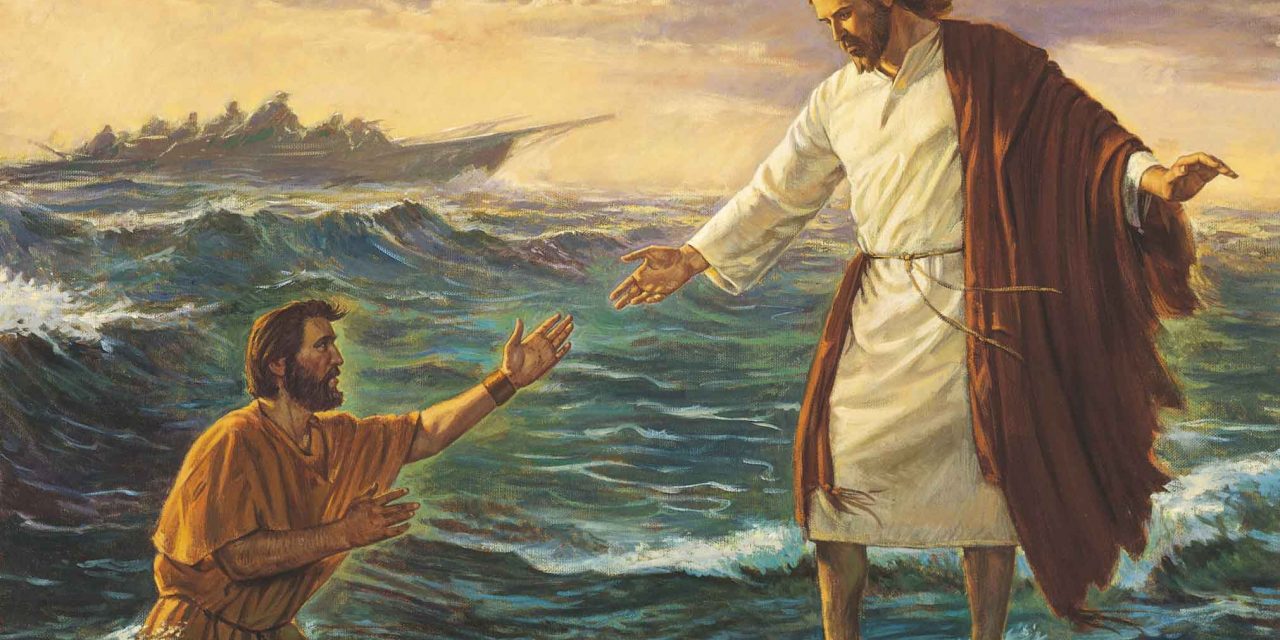
A Well Disguised Blessing?


I have been debating whether to write about this, but if it helps anyone it might be worth it.


In June of 2019, I was offered a promotion at work to the position of trainer. A few weeks later, however, about a week before the promotion was to become effective, the site director/training manager informed me that there was going to be a four week delay to the promotion because they didn't have enough new agents for a full training class. The site director also said that he was committed to me being a trainer because I had earned it.

Four weeks later I approached the site director to get an update, and was told that everything was up in the air, but that a certain number of classes had been decided upon. Four or five weeks later, he said the same thing. A week or two later, the site director left the company -- without saying a single, solitary word to me!

A couple of weeks after that, the new training manager finally got around to telling me that the promotion offer had been withdrawn. He said it was not because of anything I did but because there was not a need for a trainer. Translation: It wasn't personal, it was business; also, they couldn't find enough trainees at the wage they were willing to pay. The thing is, I needed this promotion; I needed the experience, and I needed the increase in salary.

While this was not good news, it was better than being left in the dark, waiting and wondering. From mid-July to late October I was experiencing anxiety that seemed to be growing exponentially each week. I have been dealing with depression for most of my life, and I have certainly experienced anxiety, but nothing on the scale of what I was feeling in the fall of 2019.

I once compared depression to submarine stories that I have read. The boat is sinking, the captain gives the order "blow negative, full rise on the planes," the water is forced from the tanks and replaced by air, and yet the boat continues to sink. Yeah, that's depression.

Depression is not something where you just go cheer yourself up and you're good. It doesn't work that way. You work hard to climb out only to find something at the top that sends you spiraling back down into depression. You have righted your ship, only to be hit by another torpedo.

Frankly, I was also embarrassed. It is quite natural, after getting a promotion, to announce the news to family and friends. Having had the rug pulled out from under me, I didn't have the heart to talk about it for several weeks.

When suffering from depression we might be inclined to avoid people, yet we need someone to say "I love you. I am here for you. How can I help you? I want to understand. You are not a burden. You are not bad. You are not replaceable."

In October my wife hurt her knee; it turned out to be a partial MCL tear. She had surgery just before Thanksgiving. She had to miss six weeks of work, though she returned part time the last two weeks. At a time when I was already feeling broken, more weight was now falling on my shoulders and I was feeling overwhelmed. At a time when leaving that company would be a completely reasonable reaction to what happened with that promotion, I couldn't leave because my wife would be missing work for six weeks. On top of that, I would need to take care of her as she recovered. It was all too much.

So I stayed at my job, and I took care of my wife, and we got through it. But I was an emotional basket case, and still stunned at how things had played out at work. Whether by omission or commission, the effect is the same.

At the same time, I transitioned to working from home. While I had to stay in the short term while taking care of my wife, I wasn't certain that I could stay long term, and now I had to transition to working from home. Thankfully, that transition wasn't too difficult.

When the new training manger finally told me about the offer being withdrawn I asked him what the future looked liked as far as training. He said there was going to be one class, but it was to be by remote training via the internet. He was going to teach that class since he had experience with remote training. My experience was in a classroom setting.

Winter often seems like a time for discontent, and this year it seemed to be more of the same. I felt like an emotional basket case, but back in March I was trying to find a way forward. What happened with the promotion was in the past, and it was past time to leave it there. It was time to get rid of all expectations, to recognize that I did not need anyone's approval.

And then the pandemic arrived. The stress increased with my job as agents still working in brick and mortar offices were sent home and at home agents like me had to pick up the slack. Meanwhile, more people were calling due to the pandemic to get essential over the counter supplies like hand sanitizer, which were not available. My stress and anxiety went through the roof.

Yet, with so many stuck at home, unable to work, and worrying about how they were going to pay the bills, at least I was working and getting paid. Since my wife was working in a care center, her job was considered essential, so both of us were working. At a time like that, such a blessing should not be underappreciated.

While it didn't seem like it at the time, it was a good thing I stayed at this job, and that I transitioned to working from home. Had I done the completely reasonable and understandable thing and left that company to find another job I could very well be out of work right now.

But there is more to my story. On a Friday night in April, my lower back started hurting. I went to bed and suddenly I started shaking and I couldn't stop until I got up to take some ibuprofen. When I woke up I thought I had the flu. I tried to get a lot of rest but I wasn't getting better, and I felt like I couldn't go to the pharmacy to pick up my insulin. That's when things started spiraling. By Wednesday night I was super weak, couldn't eat, and was having trouble breathing. So we called 911.

They sent an ambulance, which took me to the hospital. The diagnosis: Ketoacidosis, which can happen if you miss even a few doses of insulin. Next time I'm sick and need to pick up an prescription, I'll ask someone to go get it for me. I can to be slow at times in asking for help. I think it is also possible that all that stress and anxiety from work at least contributed to my diabetes getting out of control enough that I landed in the hospital for a couple of days.

After an experience like that, you try to have a new lease of life, a new attitude. After two weeks I went back to work and my new attitude didn't survive even the first week. While things had calmed down at work, and I was experiencing less anxiety, my job can still be toxic with angry callers and an oblivious management. Every shift seems like a day spent at the scene of the crime.

I was feeling lost and alone, isolated behind the reef that seems to separate me from my friends. I felt like I didn't even know what friendship was anymore. My ideas of what I wanted friendship to be appeared to be out of touch with the world I live in. I didn't seem to fit in anywhere, to belong anywhere. There are moments even now when I still have those feelings.

In July 1945, when Winston Churchill's party lost an election and his premiership ended, his wife suggested that it could be a blessing in disguise. Winston responded with a quip about the blessing being very well disguised. I think I understand better this concept of a very well disguised blessing.

A friend recently wrote about some of the struggles they have experienced. She asked others why they did not seem to have similar things happening to them and they replied with something to the effect of "they don't allow it." I responded to this by saying I don't know what that phrase means. I can control how I react to the bad things that happen. I can control what I tell myself about what happened. I cannot control what other people do or don't do. Perhaps they are really saying "they don't allow it to control them." She answered by saying that she was learning not to internalize things.

I do not need to internalize, either. I should not internalize. Regarding an old friend that cut me out of her life, what she did says nothing about me.  I sought to make amends. Later I sought to make peace. I did what I could. She made her choice.

What my employer did also says nothing. My employer badly handled the promotion offer and withdrawal. I did nothing wrong.


Monday, April 13, 2020

Weak Things Become Strong


One summer day when I was 17, I had a little bit of a meltdown at a church softball game; and as it happened, my father was there to see it. When I went to bed that night I found a note on my pillow suggesting that I read Ether 12:27: “And if men come unto me I will show unto them their weakness. I give unto men weakness that they may be humble; and my grace is sufficient for all men that humble themselves before me; for if they humble themselves before me, and have faith in me, then will I make weak things become strong unto them.”

Joseph Smith said of James 1:5 that “Never did any passage of scripture come with more power to the heart of man than this did at this time to mine.” I will not try to compete with Joseph on this but my experience was similar to his. I had plenty of weaknesses, but the question now was how to humble myself and have faith. To find the answer I started reading The Book of Mormon.

At times I felt that it was a struggle to exercise faith, but there were also days when the Lord answered my prayers with needed help and with needed answers to some difficult questions. Through the examples of great men such as Nephi, Alma, Captain Moroni and others, I learned how to exercise faith and humble myself. There were certain things that I stopped caring so much about, and an amazing thing happened: Some of those good things I worried about because they were not happening, started to happen. I had faith in Jesus Christ, I knew that my Heavenly Father loved me, I loved both of them, and this brought happiness.

Still, there were some lessons that I needed to go on a mission to learn. I was blessed with several good examples in the mission field.  One of my first zone leaders was a pretty amazing missionary, and at the end of my first two months in California he was called to be an assistant to the mission president. Subsequent to that, his former companion, who was still one of my zone leaders, told me about that elder’s amazing transformation. When he first arrived in San Jose, this elder was extremely shy and quiet -- he said all of five words in his first two months, but he set a goal and did a lot of soul searching. As noted, he eventually became an A.P.

One of my first few companions was also very shy when he first arrived in the mission field. He was so shy that he didn't even speak at his farewell. He had a twin brother and the meeting was for both of them, but my future companion did not show up to the meeting until the last five or ten minutes, and he sat in the back of the chapel. The bishop saw him and asked if he would like to come up and bear his testimony, but this elder just waved him off. He was probably trying to act cool, but in reality he was scared to death. 


This missionary couldn’t even order himself a hamburger at a fast food restaurant he was so shy.  But then someone explained to this elder that it was all just intimidation, and he realized that he was allowing the girl behind the counter to intimidate him, as he was other people. By the time I met him, some two years later, it was obvious that he was not intimidated by anything or anyone.

Those who go on missions have an amazing opportunity, they can humble themselves, have faith, and through the grace of their Savior, they can have their weaknesses become strengths. What is really amazing is how much they can learn in just two short years. I learned more in my two years than in all the years before or since, though I am still learning.

Yet another of my zone leaders argued that we should not measure success by leadership positions we held or even by how hard we worked, much less by the number of baptisms we had. Rather, we should measure success on a mission by the strength of our relationship with the Savior. Consider that “when ye are in the service of your fellow beings, ye are only in the service of your God” and “how knoweth a man a master whom he hath not served.” Missionaries have a wonderful opportunity to come to know their Savior as they serve him.

Those who did not have the opportunity to serve a mission, as well as those who did serve and have returned home, still have this amazing opportunity. Whoever we are and at whatever stage in life we are at, we will still have opportunities to serve the Lord, to humble ourselves, have faith and have our weaknesses become strengths.

No matter how much adversity we have experienced, or how much one has learned, we are still human and will continue to fall short of perfection because of our weaknesses and inadequacies. The good news is that the Atonement is there for us, even if our failings are not great sins. There will always be the the opportunity to humble ourselves and have faith in Christ and to be lifted by His grace.

Everyone has down times occasionally, and everyone experiences feelings of inadequacy – though we may have experienced a mighty change of heart, we may not always feel like singing the song of redeeming love. This is in no small part due to the conditions we face here in mortality and the ideals or teachings we aspire to live by. Elder Bruce C. Hafen of the Seventy has written that there is a gap between reality and the life we strive to live in keeping the commandments and following the Savior's example. We are commanded to “be ye therefore perfect, even as your Father in heaven is perfect” and yet we keep falling short.

Some people respond by discarding the ideal. They say it is too hard so why even try; we will be much happier if we accept reality and do not try to live an impossible ideal. Others ignore reality and say that they have already reached the ideal, even as they continue to fall short just like the rest of us. Falling short does not mean that we are willfully rebelling against God, it only means that we are human. The Atonement is not just for sinners – though as Paul said, “For all have sinned and come short of the glory of God” -- it is also for those striving for perfection; for those who have gone from bad to good and are trying to go from good to better.

We strive, we stretch, we reach, and still we fall short; yet by humbling ourselves and having faith in Christ we can be lifted by His grace. We stretch and struggle, but as we humble ourselves and have faith our weakness becomes strong unto us through the grace of Christ.

I sought to humble myself and have faith while on my mission, and sought my own transformation. What I found, regarding my quiet personality, is that shyness is easy to overcome but that didn't mean I was going to become a great conversationalist. I can still be very quiet, but when talking about a subject I know a lot about, like military history, or when bearing testimony, I can find the words, and even more, I can speak with power. I am not telling you this to brag, for – at least when I am discussing the gospel and bearing testimony -- it is the spirit that is giving me the words.


I experienced what seemed like a significant amount of adversity in my first six month. Then, one night I found myself on my knees pleading for witness from the spirit.  After some difficulty, as I think my faith and sincerity were being tested, I got the witness I sought.  It was as if a match had been lit in the dark of night, and the despair and doubt fled, and the light that flowed into me increased until it nigh consumed me.  And I knew, really knew, in a way I had not before.

And a few weeks later it all came together, the faith, the confidence, the humility, and the testimony.  We made a call back on a couple that we had tracted into, and as we entered their living room I saw a stack of books next to the husband's chair.  I knew right then that we were in trouble.  For the next hour he fired one challenge after another at us, and we answered as best we could, but then, guided by the spirit, I kind of took over.  I told the story of receiving that witness from the spirit and bore the most powerful testimony I could, and I withstood the challenges they both threw back at me.  The wife got so angry at one point that she almost threw her copy of the Book of Mormon at me!

After we left, my companion turned to me and said, “You are amazing.”  But it wasn't me, it was the spirit. 
He had strengthened me as I bore witness of the truth of the restored gospel.  He had made weak things become strong! I can testify to the truthfulness of Ether 12:27, but not just from my own experience, but because of the transformations I have seen in others.

Though he made me strong, yet I remained weak.  Were it not so, I could not have stayed humble.  When filled with the spirit, I could bear a mighty testimony, yet I continued to entertain so many doubts about myself.  I still had occasions when I felt inadequate.  I still made mistakes.

As noted, we are all human and therefore we all have weaknesses. We need not think that we are better than others for there is plenty of evidence to the contrary.

Some of the worst things that happen to us are the things we do to ourselves; the doubts we entertain, the grudges that we carry, the habits we pick up and the sins we commit. Nephi saw the Son of God, yet he felt to say once “O wretched man that I am” because of the sins and temptations which so easily beset him. We may sometimes feel as Nephi did; if so we should say as he did “Awake, my soul! No longer droop in sin. Rejoice, O my heart, and give place no more for the enemy of my soul. . . . Rejoice, O my heart, and cry unto the Lord, and say: O Lord, I will praise thee forever: yea, my soul will rejoice in thee, my God, and the rock of my salvation.”

And I would add, “Let me not forget, O Savior, thou didst bleed and die for me, When thy heart was stilled and broken, On the cross at Calvary.”

“He died in holy innocence, A broken law to recompense.” But he lives! "He lives who once was dead," “He lives, all glory to his name! He lives, my savior still the same. O sweet the joy this sentence gives, I know that my Redeemer lives.”


We should always strive to be humble, meek and submissive.  Only then can we have the spirit to guide us, only then can we teach with the spirit.  We should never try to rely on our own understanding, or on our own knowledge of the scriptures or of gospel principles.  We should always strive to have the spirit, and to rely on God.  When we do that amazing things can happen.

God lives, Jesus is the Christ, the Holy Messiah, this is His church, Joseph Smith was a prophet and the Book of Mormon is true, and there is no sorrow which God cannot heal.


Hymns: While of the Emblems We Partake, In Humility, Our Savior, I Know that My Redeemer Lives.

Saturday, April 11, 2020

The At-One-Ment of Jesus Christ


For us the blood of Christ was shed;
For us on Calvary's cross he bled,
And thus dispelled the awful gloom
That else were this creation's doom

The law was broken; Jesus died
That justice might be satisfied,
That man might not remain a slave
Of death, of hell, or of the grave.


Elder Jeffrey R. Holland has written that “The central fact, the crucial foundation, the chief doctrine, and the greatest expression of divine love in the eternal plan of salvation . . . is the atonement of the Lord Jesus Christ. Much goes before it and much comes after, but without that pivotal act, that moment of triumph whereby we are made free from the spiritual bondage of sin and the physical chains of the grave . . . there would be no meaning to the plan of life, and certainly no happiness in it or after it.”

The atonement, or at-one-ment, “is the act of unifying or bringing together what has been separated or estranged," continued Elder Holland. "The atonement of Christ was indispensable because of the separating transgression, or fall of Adam, which brought death into the world. In the words of Moroni, 'By Adam came the fall of man. And because of the fall of man came Jesus Christ. . . .; and because of Jesus Christ came the redemption of man. And because of the redemption of man, . . . they are brought back into the presence of the Lord.'”  

The Atonement includes gifts that are both conditional and unconditional. The unconditional gifts include the Savior's ransom for Adam's original transgression and the resurrection from the dead.

The conditional gifts require such effort as repentance and faith as they are predicated upon the moral agency and personal discipline of the individual before they can be fully effective. “There are principles of the gospel that [we] must follow and ordinances of the gospel that [we] must obtain" wrote Elder Holland. "Mormon stresses this commitment to fundamental requirements: 'The first fruits of repentance is baptism; and baptism cometh by faith unto the fulfilling the commandments; and the fulfilling the commandments bringeth remission of sins; and the remission of sins bringeth meekness, and lowliness of heart; and because of meekness and lowliness of heart, cometh the visitation of the Holy Ghost, which Comforter filleth with hope and perfect love, which love endureth by diligence unto prayer until the end shall come, when all the saints shall dwell with God.'” 


“Virtually all Christian churches teach some kind of doctrine regarding the atonement of Christ and the expiation of our sins that comes through it," Elder Holland continued. "But the Book of Mormon teaches that and much more. It teaches that Christ also provides relief of a more temporal sort, taking upon himself our mortal sicknesses and infirmities, our earthly trials and tribulations, our personal heartaches and loneliness and sorrows – all done in addition to taking upon himself the burden of our sins.

“Christ walked the path every mortal is called to walk so that he would know how to succor and strengthen us in our most difficult times. He knows the deepest and most personal burdens we carry. He knows the most public and poignant pains we bear. He descended below all such grief in order that he might lift us above it. There is no anguish or sorrow or sadness in life that he has not suffered in our behalf and borne away upon his own valiant and compassionate shoulders.

“That aspect of the Atonement brings an additional kind of rebirth, something of immediate renewal, help, and hope that allows us to rise above sorrows and sickness, misfortunes and mistakes of every kind. With his mighty arm around us and lifting us, we face life more joyfully even as we face death more triumphantly.”


Come, ye disconsolate, where'er ye languish;
Come to the mercy-seat, fervently kneel;
Here bring your wounded hearts, here tell your anguish,
Earth has no sorrow that heaven cannot heal.


Joy of the comfortless, light of the straying,
Hope of the penitent, fadeless and pure;
Here speaks the Comforter, tenderly saying—
Earth has no sorrow that heaven cannot cure.
 

Here see the Bread of Life; see waters flowing
Forth from the throne of God, pure from above;
Come to the feast of love; come, ever knowing
Earth has no sorrow but heaven can remove.


Saved By Grace, After All We Can Do


We sing about it and we read about it, but we don't often talk about it.

Prepare our minds that we may see
The beauties of thy grace. 

Forgiveness is a gift from thee
We seek with pure intent.

Elder Jeffery R. Holland has written that “Even though there are some conditional aspects of the Antonment that require our adherence to gospel principles for the full realization of eternal blessings, the Book of Mormon makes clear that neither the conditional nor unconditional blessings of the Atonement would be available to mankind except through the grace and goodness of Christ."

"Obviously the unconditional blessings of the Atonement are unearned," Elder Holland continued, "but the conditional ones also are not fully merited. By living faithfully and keeping the commandments of God, we can receive a fuller measure of blessings from Christ, but even these greater blessings are freely given of him and are not technically 'earned' by us. In short, good works are necessary for salvation, but they are not sufficient. And God is not obliged to make up the insufficiency. As Jacob taught, 'Remember, after ye are reconciled unto God, that it is only in and through the grace of God that ye are saved.'”

Aaron taught King Lamoni's father that fallen man “could not merit anything of himself.”

Lehi declared that “There is no flesh that can dwell in the presence of God, save it be through the merits, and mercy, and grace of the Holy Messiah.”

Nephi taught that through baptism we enter the straight and narrow path that leads to eternal life, but that works are not enough to earn our way to salvation. “Nay; for ye have not come thus far save it were by the word of Christ with unshaken faith in him, relying wholly upon the merits of him who is mighty to save.”

Abinidi taught that “Salvation doth not come by the law alone; and were it not for the atonement, which God himself shall make for the sins and iniquities of his people . . . they must unavoidably perish, notwithstanding the law. . . .”


Jacob counseled us to "Cheer up your hearts, and remember that ye are free to act for yourselves -- to choose the way of everlasting death or the way of eternal life.  Wherefore, my beloved brethren, reconcile yourselves to the will of God, and not to the will of the devil and the flesh; and remember, after ye are reconciled unto God, that it is only in and through the grace of God that ye are saved. Wherefore, may God raise you from death by the power of the resurrection, and also from everlasting death by the power of the atonement, that ye may be received into the eternal kingdom of God, that ye may praise him through grace divine."

Moroni would finish the Book of Mormon by giving us a reassurance of the grace of God while noting, however, that it is a grace that requires our honest effort to claim and enjoy:

“If ye shall deny yourselves of all ungodliness and love God with all your might, mind and strength, then is his grace sufficient for you, that by his grace ye may be perfect in Christ; . . . then are ye sanctified in Christ by the grace of God, through the shedding of the blood of Christ.”
 

Nephi, of course, gave "the most succinct and satisfying resolution ever recorded in the history of the faith vs works controversy," wrote Elder Holland. Nephi said plainly, "We know that it is by grace that we are saved, after all we can do." 

God, our Father, hear us pray;
Send thy grace this holy day.

Grant us, Father, grace divine;
May thy smile upon us shine. 


Sources: Holland, J. R. (2006). Christ and the New Covenant:  The Messianic Message of the Book of Mormon.  Salt Lake City: Deseret Book.

Hymns: While of the Emblems We Partake & Come, Ye Disconsolate, 
O Lord of Hosts, As Now We Take the Sacrament and God, Our Father, Hear Us Pray.

Thursday, April 9, 2020

The Book of Mormon: Fruit of Joseph Smith and the Keystone of Our Religion


In the Sermon on the Mount, the Savior warned us against false prophets and then said that we would know them by their fruits.  "Do men gather grapes of thorns, or figs or thistles," he asked.  "Even so every good tree bringeth for good fruit; but a corrupt tree bringeth forth evil fruit."

The Savior continued, "A good tree cannot bring for evil fruit, neither can a corrupt tree bring forth good fruit.  Every tree that bringeth not forth good fruit is hewn down and cast into the fire.  Wherefore by their fruits ye shall know them."  (Matthew 7: 16-20)

We believe that Joseph Smith was a prophet of God.  How shall we know that he is a prophet?  By his fruits.  The most important fruit of Joseph Smith is the Book of Mormon.  In the Book of Mormon, the prophet Mormon expounded on the principle that "by their works ye shall know them" using the contrast of good and bitter fountains.  "For behold, a bitter fountain cannot bring forth good water; neither can a good fountain bring forth bitter water; wherefore, a man being a servant of the devil cannot follow Christ; and if he follow Christ he cannot be a servant of the devil."

Mormon continued, "Wherefore, all things which are good cometh of God; and that which is evil cometh of the devil; for the devil is an enemy unto God, and fighteth against him continually, and inviteth and enticeth to sin, and to do that which is evil continually.  But behold, that which is of God inviteth and enticeth to good continually; wherefore, every thing which inviteth and enticeth to do good, and to love God, and to serve him, is inspired of God."  (Moroni 7: 11-13)

The first thing to consider is whether the Book of Mormon invites and entices its readers to do good, to love God, and to serve him?

Early in the book, we read that the "right way" is to believe in Christ.  Nephi, the first man to keep the record that would become the Book of Mormon, wrote, "I say unto you that the right way is to believe in Christ, and deny him not; and Christ is the Holy One of Israel' wherefore ye must bow down before him, and worship him with all your might, mind, and strength, and your whole soul; and if ye do this ye shall in nowise be cast out." (2 Nephi 25:29)

Nephi would later write, "And now, my beloved brethren . . . hearken unto these words and believe in Christ; and if ye believe not in these words believe in Christ.  And if ye shall believe in Christ ye will believe in these words, for they are the words of Christ, and he hath given them unto me; and they teach all men that they should do good." (2 Nephi 33:10)

The second thing to consider is the promise given by Moroni, the last record keeper of the Book of Mormon.  Moroni promised that if we ask God in the name of Jesus Christ, with a sincere heart, real intent, having faith in Christ, if "these things", the Book of Mormon, are not true, that God will manifest the truth of it unto us by the power of the Holy Ghost.  "And by the power of the Holy Ghost," he said, "ye may know the truth of all things."

The prophet Joseph Smith was called by God to translate the Book of Mormon by the gift and power of God.  God commanded Nephi and Mormon and Moroni to keep a record and to write the words of God.  It is God, then, who gave us the Book of Mormon; Joseph Smith was his instrument in bringing forth the book in our day.  Because Joseph was God's instrument, the Book of Mormon is considered to be a fruit of his labor.  If the Book of Mormon persuades men to do good and to believe in Christ, and if it is the word of God, then Joseph Smith is a prophet of God.

President Gordon B. Hinckley said, "If the Book of Mormon is true, the Church is true, for the same authority under which this sacred record came to light is present and manifest among us today.  It is a restoration of the Church set up by the Savior in Palestine.  It is a restoration of the Church set up by the Savior when he visited this continent as set forth in this sacred record."

President Hinckley went on to say that, "If the Book of Mormon is true, the Bible is true.  The Bible is the Testament of the Old World.  The Book of Mormon is the Testament of the New.  The one is the record of Judah, the other is the record of Joseph, and they have come together in hand of of the Lord in fulfillment of the prophecy of Ezekiel.  Together they declare the Kingship of the Redeemer of the word, and the reality of his kingdom."

President Ezra Taft Benson called the Book of Mormon the "keystone of our religion," the "keystone of testimony," and said "Just as the arch crumbles if the keystone is removed, so does all the Church stand or fall with the truthfulness of the Book of Mormon."  President Benson also counseled us to use the Book of Mormon in handling objections to the church:

"All objections, whether they be on abortion, plural marriage, seventh-day worship, etc., basically hinge on whether Joseph Smith and his successors were and are prophets of God receiving divine revelation.  Here, then, is a procedure to handle most objections through the use of the Book of Mormon.

"First, understand the objection.

"Second, give the answer from revelation.

"Third, show how the correctness of the answer really depends on whether or not we have modern revelation through modern prophets.

"Fourth, explain that whether or not we have modern prophets and revelation really depends on whether the Book of Mormon is true.

"Therefore, the only problem the objector has to resolve for himself is whether the Book of Mormon is true.  For if the Book of Mormon is true, then Jesus is the Christ, Joseph Smith was his prophet, The Church of Jesus Christ of Latter-day Saints is true, and it is being led to day by a prophet receiving revelation.  Our main task is to declare the gospel and do it effectively.  We are not obliged to answer every objection.  Every man eventually is backed up to the wall of faith, and there he must make his stand."

Finally, Elder Richard G. Scott gave this counsel:  "Try reading the Book of Mormon because you want to, not because you have to.  Discover for yourself that it is true.  As you read each page, ask 'Could any man have written this book, or did it come as Joseph Smith testified?'  Apply the teachings you learn.  They will fortify you against the evil of Satan.

"Follow Moroni's counsel.  Sincerely ask God the Father, in the name of Jesus Christ, with real intent, if the teachings of the Book of Mormon are true.  Ask with a desire to receive a confirmation that the book is true.  You will then know that Jesus Christ lives, that Joseph Smith was and is a prophet, and that the Church of Jesus Christ of Latter-day Saints is the Lord's Church.  You will confirm that the Savior guides His Church through a living prophet.  These truths will become a foundation for your productive life."


There are three additional questions we might ask ourselves, based on the seed analogy in Alma 32:
  1. Do I feel that my soul has been enlarged?
  2. Has my understanding been enlightened?
  3. Have these things been delicious to me?
If we can answer yes to each of these questions, then the Book of Mormon, like the seed in Alma's analogy, is good. Our knowledge may yet be imperfect, but can know that continued study is worthwhile, and this may lead us, if it has not already, to ask God in prayer if the Book of Mormon is the word of God.

Sources:


Benson, E. T. (1988). A Witness and a Warning: A Modern-Day Prophet Testifies of the Book of Mormon. Salt Lake City: Deseret Book.

Hinckley, G. B. (1959). Conference Report, October 1959.

Scott, R. G. (2003). Conference Report, October 2003.

Wednesday, March 25, 2020

Humble . . . Meek . . . Submissive


I read some time ago about a U.S. Navy dive bomber pilot from World War II, his name was Vernon "Mike" Micheel, who would retire as a captain in 1972. During the war Micheel served to combat cruises, first aboard with Scouting Squadron Six aboard USS Enterprise (CV-6) in 1942, and later with Bombing Squadron Two aboard USS Hornet (CV-12) in 1944.

A dive bomber, of course, attacks its target by making a steep dive and dropping its bomb between 1,000 and 2,000 feet; this has the affect of turning an ordinary dumb bomb into a smart bomb as the pilot can place his bomb on the target with great accuracy. The two bombers Micheel flew were the Douglas SBD Dauntless and the Curtiss SB2C Helldiver.


On one particular mission, Micheel was attacking an airfield when his wing was hit by antiaircraft fire.  The pilot held his dive and hit his target, and when he pulled up the fire in his wing was out.  Concerned that he might not make it back to his aircraft carrier, he considered ditching in the ocean to be picked up by a friendly submarine, but his rear gunner said he was injured and that he didn’t think he could deploy the raft after ditching.  So the pilot flew his SB2C back to Hornet.

Since his plane was damaged, Vernon was forced to circle the ship until all the planes from the strike had landed.  If he had crashed on the deck during his landing, he would have fouled the deck preventing other planes from landing, so he had to wait.  Finally it was his turn.

Carrier landings during the pre-jet age were accomplished by flying around the ship and taking directions from a man with paddles standing near the stern of the ship, the Landing Signal Officer (LSO).  This was done to allow the pilot to see the LSO and his signals which would have been blocked from the pilot’s vision by the nose and wings of the aircraft in a longer, straighter approach.  While flying down the port (left) side of the carrier, the pilot is reading the signals from the LSO before making the final turn.  At the proper moment the LSO gives the cut signal, the pilot chops power and the plane falls to the deck where its hook catches a cable.

However, Micheel, instead of getting the cut signal, got the wave off signal, meaning come back around and do it again.  After getting waved off a second time, the ship radioed that he should make a bigger circle and turn in from farther out, because he was approaching too fast for the normal procedure.  The pilot had to approach at a faster speed because of the damage to his wing.  A big hole in the wing meant less lift, which meant a faster stall speed.  Go too slow and the plane stalls and falls into the sea.

Around he comes, this time making the turn from farther out, and the LSO gives him the cut signal while he is farther from the deck than in a normal approach.  “Normally,” Vernon would write later, “when you come aboard, you’re almost over the end of the carrier deck and he gives you the cut . . . you’re right there: bang, bang!  But this time he gave me a cut way out, and I could see the stern of the ship!”  The danger here was that if he cut too soon, he would slam into the stern.

Still, when the LSO gave the cut signal, the pilot pulled the throttle back to zero and the roar of the engine faded.  “Oh, I had to trust him,” he said -- in other words, he had to have faith in the LSO – “I can’t do anything else.  I just got to do what he tells me.  He knows what he’s doing, that's what he’s there for.”  The aircraft, with its damaged wing, glided in and the hook caught an arresting gear cable.  The cut had been timed perfectly.

We are the pilot and God is the LSO.  It is His work and He knows what he is doing.  He knows where His sheep are, and where we need to go to find them.  We have to trust Him and exercise faith.  If we have faith, then we must have hope, and what is it that we should hope for?  Eternal Life through the Atonement of Jesus Christ.  If we have faith and hope, then we must have charity.  If we do not have one, then we don’t have the other two.  So pray to be filled with charity.  One of the things that charity is is being humble.


President Dieter F. Uchtdorf echoed President Ezra Taft Benson in General Conference a few years ago in warning against pride.  Believing that we are better than others because we are working harder than others -- or doing whatever it is that lead us to think we are better -- is fraught with danger.  Believing that we are better than anyone for any reason is to place ourselves in the hands of the devil as he seeks to lead us carefully down to hell through flattery and deceit.  We need to avoid these dangers at all costs by humbling ourselves and praying to be filled with charity.


Missionaries should always be striving to humble themselves and exercise faith in the Father, whose work this is.  On one particular morning while on my mission I tired to do just that; I prayed to God that He would guide me and my companion in what streets we should tract that day.  After praying we looked at the map of our area and focused on a few streets.  We then prayed again, saying that we felt directed to these streets by the spirit and asking if we were right, and we felt a confirming spirit.  We went and tracted those streets, and found a woman who was baptized within two months.

This woman said she had been baptized in Hawaii when she was much younger, but a diligent search could not find her records.  While the search for her records was ongoing I prayed that they would be found, even though that would cost me a baptism.  I wanted to put the will of the Lord ahead of my own desires; I wanted to be humble, meek and submissive.

As it turned out, her records were not found (back in the day some wards did not always do a good job of sending records of new members to Salt Lake City) and we had a baptism.  But more importantly, this woman was one of the Lord's sheep, He always knew where she was, and she was found by us because we humbled ourselves and asked for His direction.  Oh, we had to trust Him, we could not do anything else.


Source: Ambrose, H. (2010). The Pacific. New York: Penguin Group (USA).


Wednesday, March 18, 2020

Loma Prieta, October 17, 1989


October 17, 1989, started out as just another day in Watsonville, California.  We went back to our apartment for an early dinner around 5:00 p.m. and my companion decided to take a nap while I ate.  As I started to eat I heard a rolling/shaking sound outside, arcing toward the apartment, then the building began to shake.  My first thought was, "Oh, we get an earthquake today."  I had experienced a few other earthquakes in the 21 months I had been in California, and they were small quakes, each under 5.5 on the Richter scale.  It quickly became obvious, however, that this was not going to be a small quake.

Our apartment building was no longer on solid ground; it was as if we were aboard a small ship being tossed violently by heavy seas.  The shock waves of the quake would pick the building up and then drop it, over and over again.  BANG! BANG! BANG!  At this point my comp woke up from his nap, thinking I was playing some kind of practical joke on him.  The shaking intensified and books started falling off shelves.  We both jumped up and collided with each other on our way to the nearest door jamb.  As we stood there, I was conscious of nothing but the quake; I did not see the havoc being raised around me.


It was 5:04 p.m., and my companion and I, and everyone else in Watsonville, were just 17 miles from the epicenter at Loma Prieta.  According to official reports, the earthquake lasted just 15 seconds, to me it seemed more like three minutes, it just went on and on and on.  When it finally ended I gradually became aware of my surroundings, and the first thing I noticed were the chandeliers -- balls at the end of a chain -- swinging around and around overhead.  We didn't see much else as we decided to get out as fast as we could.  We crossed the street to a park and waited, not knowing what to do.  A man came by with a radio, and as we listened, we learned about the major disaster that had hit the Bay Area.

That night we slept in a tent.  The next day we traveled around Watsonville, seeing the devastation first hand -- houses burned down after gas leaks were ignited, houses that had jumped off their foundations, building facades that had crumbled, and a large crack in the downtown shopping center.  I saw porches that had collapsed and wondered what would have happened if we had been out tracting (door knocking) when the quake hit.  There was a long line at the grocery store as people lined up to buy bread and water.  Everywhere we heard rumors of another, bigger earthquake to hit sometime that day or night.

We went back to our apartment and had a barbecue lunch -- we were still without electricity.  Then we took a nap to catch up on lost sleep.  We were awoken by a knock on the door, it was our mission president, his wife and the A.P.s; they had come to check on us because we weren't home when they had called us on the phone.  They told us that church headquarters in Salt Lake City knew that all of the missionaries were safe, and that an announcement would be made on the news.

That night we decided to sleep in our apartment, but we were all experiencing a little fear and trepidation due to the rumors of a bigger quake.  As I prayed before going to bed, I thanked my Heavenly Father for my life, my safety and my shelter. I then explained my fears and anxieties about the rumors of another quake, and then asked for forgiveness for my weakness. I asked that he would help my lack of faith and then I asked if there would be another earthquake. I said that I knew there would be more aftershocks, but I wanted to know if there would be any more major earthquakes. The spirit gave me a sweet assurance there would be no more big quakes and I was blessed with peace.

There were more aftershocks that night; in fact, there seemed to be an aftershock every hour on the hour.  A particularly big aftershock at 2:00 a.m. woke me up.  My heart was beating fast, but I said to myself, “No, have faith. There can be no faith where there is fear. He promised that there would not be another big quake. Trust Him!”  A bigger aftershock around 3:00 a.m. woke us all up and we each ended up out in the living room. We listened to the radio for a few minutes.

By a quarter to 4:00, my companion, our district leader and his companion were asleep on the living room floor. I could not sleep and did some more reading by candlelight. By 4:30 a.m., I was also asleep on the living room floor. Thirty minutes later a big aftershock hit. Again I repeated, “No, trust Him.” That was the last aftershock of the night. The Lord kept his promise. By 8:00 a.m. the next morning we had electricity again. It felt like a turning point.  Later I wrote in my journal, "What an experience, though, to be able to go to a loving Heavenly Father and ask him if there would be any more big earthquakes, and then to receive an answer! What a confirmation of His love!"

I testify that Heavenly Father hears and answer prayers, and will give us peace when we need it, if we but ask Him in prayer.